

Why “Touch Grass” Became the Internet’s Favorite Insult

By Kate Willis on May 17, 2026
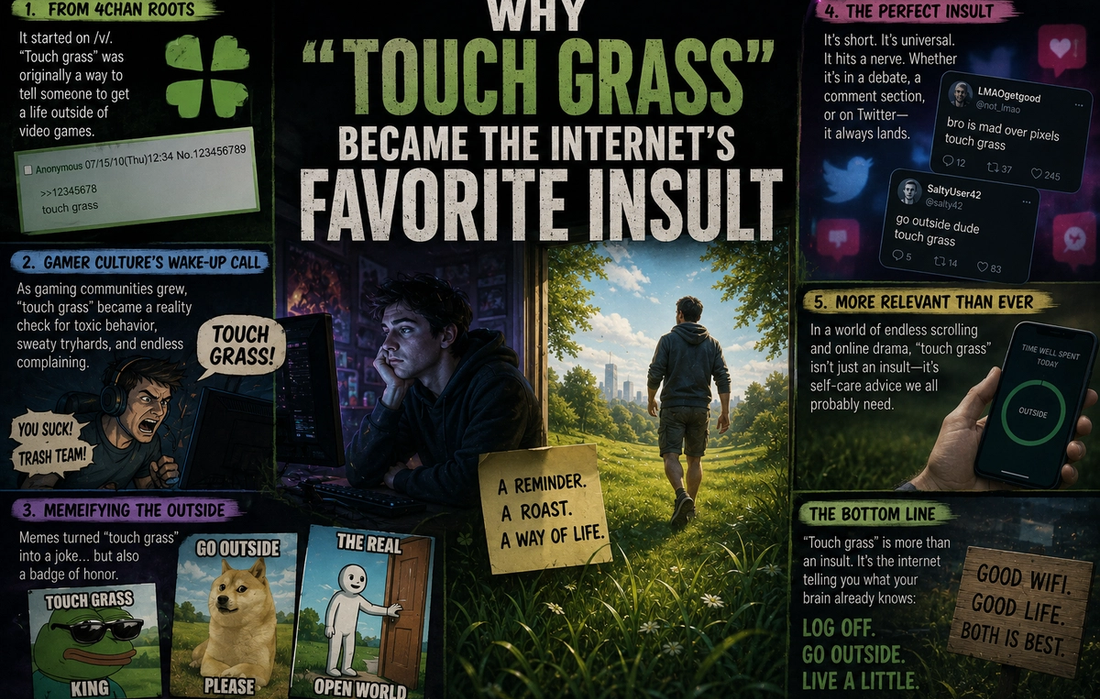
Few internet insults became as popular — or strangely universal — as “touch grass.”
At first glance, the phrase sounds harmless, almost ridiculous. But online, it carries a very specific meaning: disconnect from the internet, go outside, and reconnect with reality.
The insult exploded across social media because it perfectly captured a growing frustration with extreme online behavior. Whether aimed at obsessive fandoms, endless arguments, conspiracy theories, or people spending far too much time online, “touch grass” became shorthand for digital imbalance.
And the reason it spread so quickly says a lot about modern internet culture itself.
Key Takeaways
- “Touch grass” became a popular internet phrase during the social media era
- The insult usually implies someone spends too much time online
- It reflects growing awareness of digital burnout and internet obsession
- The phrase became popular because it is both funny and oddly relatable
- The internet increasingly jokes about its own unhealthy habits
The Phrase Is Simple but Surprisingly Effective
Part of what made “touch grass” spread so widely is how simple it sounds.
Unlike long arguments or complicated insults, the phrase immediately communicates a clear idea: you need to step away from the internet for a while.
It works because most people instantly understand the image behind it: someone so consumed by online discourse that they forgot what normal offline life feels like.
The insult is funny partly because it exaggerates a real concern many people secretly recognize in themselves.
Internet Culture Became Increasingly Intense
Online spaces today move incredibly fast.
People spend hours scrolling through:
- political arguments
- fandom drama
- outrage cycles
- conspiracy theories
- endless comment sections
As social media platforms grew larger and more emotionally charged, internet behavior often became more extreme and exhausting.
“Touch grass” emerged as a reaction to that intensity.
It became a way of saying: this conversation stopped being healthy a long time ago.
The Internet Started Becoming Self-Aware
One interesting thing about the phrase is that it reflects the internet becoming more self-aware about its own unhealthy habits.
People online increasingly joke about:
- doomscrolling
- screen addiction
- parasocial relationships
- online obsession
- social media burnout
The internet now regularly mocks behaviors it also encourages.
“Touch grass” works because many users understand exactly how easy it is to become trapped inside endless online cycles without realizing it.
In some ways, the insult is almost self-directed.
The Pandemic Accelerated Everything
The phrase became especially popular during and after the COVID-19 pandemic.
Lockdowns pushed huge portions of life online:
- work
- school
- friendships
- entertainment
- social interaction
People spent unprecedented amounts of time indoors and connected to screens. Online culture intensified dramatically during that period, and internet arguments often became more emotionally charged.
As a result, phrases encouraging people to reconnect with offline reality suddenly felt more meaningful.
“Touch grass” became both a joke and genuine advice at the same time.
It Reflects Anxiety About Digital Life
Beneath the humor, the popularity of the phrase reveals growing discomfort with how online modern life became.
Many people feel overwhelmed by:
- constant notifications
- algorithmic feeds
- internet outrage
- information overload
- nonstop online discourse
The insult resonates because it points toward something people increasingly crave: balance.
Going outside, disconnecting briefly, or stepping away from social media now feels almost rebellious in highly connected digital environments.
The Phrase Also Became Overused
Like most internet slang, “touch grass” eventually became overused.
People now use it constantly in situations where it barely makes sense. Sometimes it functions less like meaningful criticism and more like a lazy way to dismiss opinions online.
That happens to many viral internet phrases: once they become mainstream, they slowly lose precision.
Still, the phrase survived longer than most memes because the core idea behind it remains emotionally relevant.
People Secretly Understand the Message
Part of why “touch grass” became so effective is because most internet users recognize at least a small truth behind it.
Almost everyone experienced moments where they:
- spent too long online
- got emotionally drained by social media
- became too invested in internet arguments
- felt disconnected from real life
The phrase works because it taps into a shared awareness that constant online living can become unhealthy surprisingly quickly.
The Internet Misses Offline Reality More Than It Admits
Ironically, one reason internet users joke so much about “touching grass” is because many people genuinely miss slower, more grounded experiences.
As digital life becomes increasingly immersive, ordinary offline moments suddenly feel valuable again:
- walking outside
- talking face-to-face
- being unreachable for a while
- existing without constant notifications
The phrase became popular not only because it is funny, but because it reflects a deeper cultural feeling: people are starting to realize they do not always want to be online all the time.
And perhaps that is why such a simple insult ended up becoming one of the internet’s most relatable phrases.