
Vast Haven-1: Pioneering the First Commercial Space Station in 2027
S
By Sam Dwell on February 6, 2026
Vast Haven-1: The Dawn of Commercial Space Stations
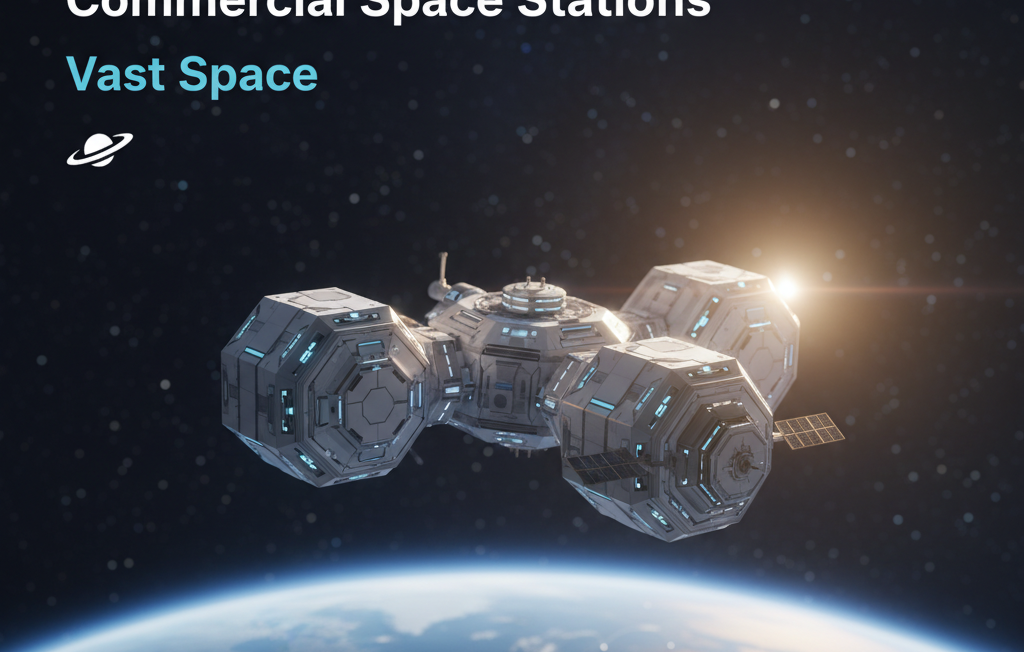
Imagine a future where space travel isn't just for astronauts but for ordinary people seeking adventure or conducting research. Vast Haven-1 is steering us toward that reality, marking a significant milestone in the evolution of commercial space stations. As the first privately developed space station, Haven-1 has the potential to redefine how humanity interacts with outer space.
Key Takeaways
- Haven-1 is a commercial space station designed to support various missions, including research, manufacturing, and tourism, with capacity for four crew members.
- The station utilizes a modular design, enabling flexibility in expanding its capabilities and integrating with other space systems as technology evolves.
- Vast Space aims to launch Haven-1 by early 2026, with plans for a fully operational facility by mid-2027, paving the way for the commercialization of low Earth orbit.
- The integration phase of Haven-1 is currently ongoing, focusing on assembling its hardware and ensuring it meets rigorous safety and operational standards.
- Vast Space employs a hardware-rich development strategy, leveraging existing technologies while innovating new solutions to enhance the station's functionality.
- The station will facilitate 24/7 crew missions, making it possible to conduct experiments and operations without the constraints of traditional space missions.
- Haven-1 is part of a broader trend in commercial space exploration, indicating a shift from governmental to private sector leadership in space endeavors.
The Vision Behind Haven-1
Vast Space, founded in 2020, has a clear vision for Haven-1: to create a sustainable, commercially viable platform in low Earth orbit. The company is betting on a future where space isn't just the final frontier but a playground for scientists, entrepreneurs, and tourists alike. This vision is not just about building a space station; it's about fostering a new economy in space.
The integration phase of Haven-1 is a critical step in realizing this vision. The team at Vast Space is actively assembling the station's hardware, ensuring that it meets strict safety standards while remaining adaptable for future technologies. This adaptability is key; as new advancements in space travel and research emerge, Haven-1 can evolve without needing a complete overhaul.
Expanding Opportunities in Space
Haven-1's modular design is not just a technical specification; it's a strategic advantage. The ability to add new modules or reconfigure existing ones allows Vast Space to respond to market demands and scientific opportunities quickly. Whether it’s expanding research capabilities or accommodating more tourists, this flexibility positions Haven-1 as a cornerstone of future commercial space activities.
Moreover, the station's capacity for four crew members opens the door for various missions. Research teams can conduct experiments in microgravity, startups can test new products, and even tourists can experience the thrill of life in space. This democratization of space is a pivotal shift, moving away from exclusive government missions to a broader, more inclusive approach.
The Commercial Space Race
Vast Space is not alone in its ambitions. The commercial space race is heating up, with several companies vying for dominance. However, what sets Haven-1 apart is its focus on infrastructure rather than just transportation. While companies like SpaceX and Blue Origin are making headlines with their rockets, Vast Space is laying the groundwork for what could be the backbone of future space exploration activities.
The push for commercial space stations aligns with increasing demand for off-Earth research and manufacturing. For instance, microgravity environments are ideal for developing pharmaceuticals and advanced materials that aren't possible on Earth. This shift toward commercial viability is not merely a trend; it's a seismic change in how humanity will utilize space.
The Path Forward
As we look ahead to the expected launch of Haven-1 in early 2026, it's essential to consider the implications of this venture. Vast Space is not just creating a space station; it’s setting the stage for a new era of humanity's exploration and utilization of space. The next few years will be crucial in determining how effectively this vision translates into reality.
With the integration phase underway and the ambitious timeline laid out, the world watches closely. Will Haven-1 fulfill its promise? Will it become a hub of innovation and exploration? Only time will tell, but one thing is clear: Vast Haven-1 is not just the dawn of a space station; it's the dawn of a new chapter in our relationship with the cosmos.
In the grand narrative of space exploration, Haven-1 symbolizes hope and opportunity. As this project unfolds, it challenges us to rethink what’s possible and inspires the next generation of explorers, scientists, and dreamers to reach for the stars.