The Quiet Rise of the Anti-AI Movement

By Kate Willis on May 17, 2026
Artificial intelligence is everywhere right now.
Tech companies describe AI as the future of work, creativity, productivity, and daily life itself. New tools appear almost weekly, promising to automate tasks, generate art, write code, answer questions, and replace repetitive labor.
But while excitement around AI continues growing, another trend has been quietly rising alongside it: resistance.
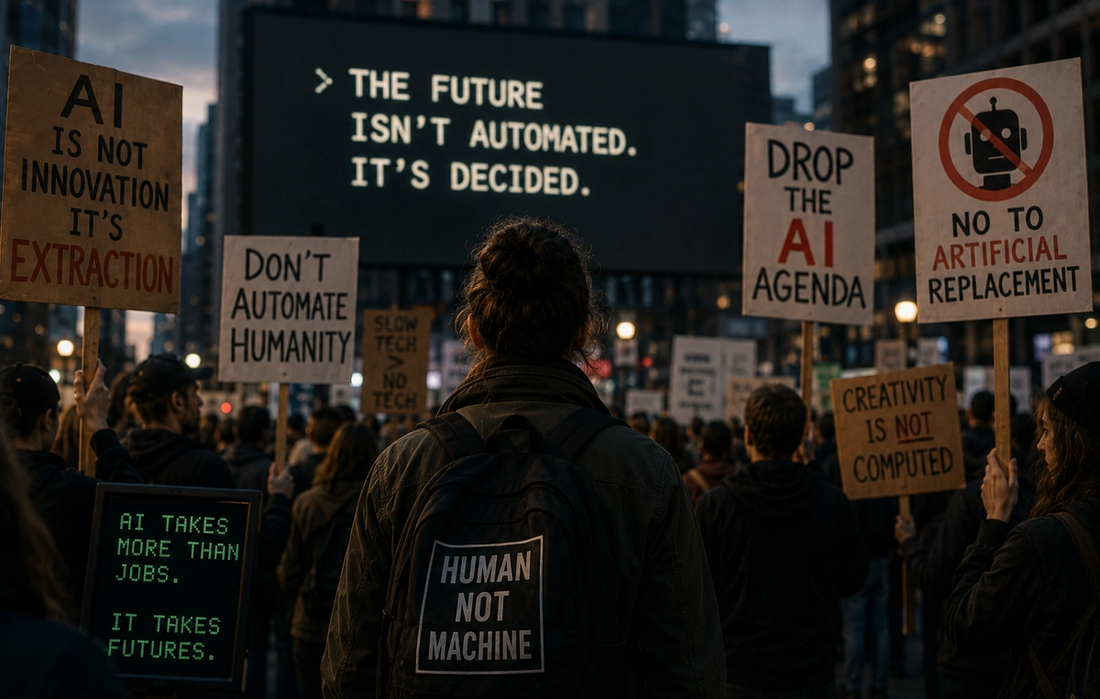
More people are beginning to push back against artificial intelligence — not necessarily because they hate technology, but because they feel increasingly uneasy about how fast AI is spreading into every part of life.
The anti-AI movement is not one single organized group. It is a growing collection of artists, workers, writers, educators, programmers, and ordinary users questioning whether the future being built around AI is actually the one they want.
Key Takeaways
- Growing numbers of people are becoming skeptical of AI expansion
- Concerns include job loss, misinformation, privacy, and creativity
- Artists and writers have become some of the loudest critics
- Many users feel exhausted by AI being added to everything
- The movement reflects broader anxiety about technology and control
Many People Feel AI Is Moving Too Fast
One major reason behind the backlash is speed.
AI tools evolved incredibly quickly over the past few years. Suddenly, companies began integrating AI into search engines, workplaces, social media platforms, education tools, and creative software almost simultaneously.
For many users, it felt less like gradual innovation and more like a sudden flood.
People barely had time to understand one AI system before another appeared. That rapid pace created anxiety, confusion, and distrust — especially because the long-term consequences still feel unclear.
When technology changes faster than society can emotionally process it, resistance often follows.
Artists and Creators Feel Especially Threatened
Some of the strongest opposition to AI comes from creative communities.
Writers, illustrators, musicians, voice actors, and designers increasingly worry about:
- Job displacement
- Uncredited training data
- Copyright concerns
- Devaluation of human creativity
Many artists argue that AI companies trained systems using enormous amounts of creative work scraped from the internet without proper permission or compensation.
As AI-generated content improves, some creators fear audiences and companies may prioritize speed and low cost over original human work.
For people whose identity and livelihood depend on creativity, the rise of generative AI feels deeply personal.
AI Fatigue Is Becoming Real
Another reason for the growing backlash is simple exhaustion.
Companies now market AI features constantly:
- AI search
- AI assistants
- AI summaries
- AI-generated images
- AI productivity tools
- AI customer service
At a certain point, many users started asking: Does everything really need AI?
Not every problem feels improved by automation. Some people simply want products that work reliably without constant algorithmic interference.
The pushback is partly about preserving human experiences that feel slower, simpler, or more intentional.
People Worry About Misinformation and Trust
AI-generated content also creates growing concerns about truth itself.
Deepfakes, fake voices, AI-generated articles, and synthetic images are becoming increasingly realistic. As these tools improve, distinguishing real content from artificial content may become much harder.
That uncertainty affects trust online.
People already struggle with misinformation across social media and news platforms. AI-generated media threatens to make that problem even more complicated.
Many critics worry society is moving into an era where seeing something online no longer guarantees it actually happened.
Job Anxiety Is Driving Fear Too
Automation fears are not new, but AI made them feel more immediate.
Unlike earlier waves of automation that mainly affected physical labor, modern AI increasingly targets:
- Writing
- design
- coding
- customer service
- research
- office work
Many workers now worry that industries once considered “safe” from automation may change dramatically in coming years.
Even people excited about AI often feel uncertain about how jobs and economic systems will adapt long term.
The anxiety is not always about AI itself — it is about instability.
Some Critics Simply Miss Human Imperfection
Part of the anti-AI sentiment is emotional rather than technical.
Many people feel uncomfortable replacing human interaction with algorithms. They miss imperfections, unpredictability, and genuine human effort.
AI-generated content can sometimes feel strangely empty even when technically impressive.
People increasingly value:
- Human-made art
- Real conversation
- Authentic mistakes
- Personal perspective
- Emotional sincerity
As digital life becomes more automated, human imperfection starts feeling more meaningful rather than less.
Not Everyone Opposing AI Rejects Technology
Importantly, many AI critics are not anti-technology overall.
Some work in tech themselves. Others use AI tools regularly while still questioning how the technology is being deployed.
The movement is often less about stopping progress completely and more about asking difficult questions:
- Who benefits?
- Who loses?
- What gets automated?
- What remains human?
- How much control should large tech companies have?
These concerns are becoming harder to dismiss as AI spreads further into everyday life.
The Backlash Will Likely Keep Growing
Artificial intelligence is unlikely to disappear. The technology is already deeply integrated into major industries and products.
But resistance will probably continue growing alongside adoption.
Historically, every major technological shift creates both excitement and backlash. Cars, television, the internet, and social media all triggered fears and cultural resistance at different moments.
AI may simply be the next chapter in that pattern.
The Debate Is Really About the Future of Human Life
At its core, the anti-AI movement reflects a deeper question: What kind of future do people actually want?
Technology is never only about efficiency. It also shapes creativity, work, relationships, identity, and culture itself.
Some people see AI as liberation from repetitive labor. Others see it as the beginning of a more artificial and emotionally disconnected world.
Most likely, the future will contain both possibilities at once.
And that tension is exactly why the conversation around AI suddenly feels much bigger than technology alone.