

7 Ways AI Is Quietly Changing Your Daily Life Without You Noticing

By Kate Willis on May 17, 2026
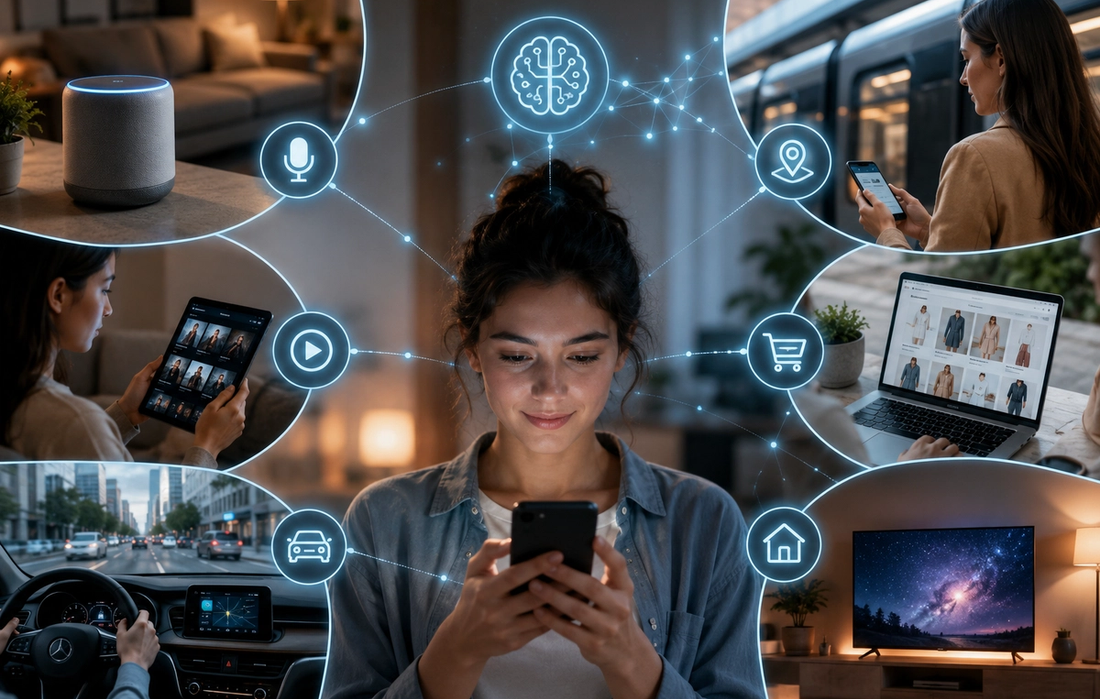
Artificial intelligence often sounds like something futuristic — self-driving cars, humanoid robots, or machines taking over jobs. But the reality is much less dramatic and far more interesting. AI is already deeply woven into everyday life, quietly shaping how people shop, communicate, travel, work, and consume information.
Most of the time, people do not even realize it is happening. No flashing lights or robotic voices are announcing its presence. Instead, AI works silently in the background, learning patterns, predicting behavior, and making small decisions that slowly influence daily routines.
Whether someone notices it or not, modern life is increasingly built around artificial intelligence.
Key Takeaways
- AI already influences many everyday activities without being obvious
- Recommendation algorithms shape what people watch, buy, and listen to
- Smartphones use AI constantly for photos, navigation, and battery optimization
- Online advertising and shopping heavily depend on machine learning
- AI personalization is quietly changing how people experience the internet
Your Phone Is Smarter Than You Think
Most people interact with artificial intelligence hundreds of times a day through their smartphones alone.
Modern phones use AI for far more than voice assistants. Camera systems automatically recognize faces, improve lighting, sharpen blurry images, and enhance colors instantly. Night mode photography, portrait effects, and automatic photo sorting all rely heavily on machine learning.
Battery management is another hidden example. Smartphones study usage patterns and learn which apps people use most often. Over time, the device adjusts performance and power consumption automatically to improve battery life.
Predictive text and autocorrect also rely on AI. Phones analyze typing habits, commonly used phrases, and language patterns to predict what someone is about to say before they finish typing.
The more a device learns from its owner, the more personalized the experience becomes.
Streaming Platforms Are Constantly Studying You
Netflix, Spotify, YouTube, TikTok, and nearly every major entertainment platform use AI-driven recommendation systems.
Every click, pause, replay, skip, and search helps train algorithms designed to predict what users want to see next. This is why two people opening the same app can experience completely different homepages.
Streaming services no longer simply host content. They actively shape viewing behavior.
TikTok is perhaps the most powerful example. Its recommendation engine learns user preferences extremely quickly, sometimes within minutes. The app studies watch time, engagement, scrolling speed, and interaction patterns to create highly personalized feeds.
The result is an internet experience that feels uniquely tailored to each person — because it is.
Online Shopping Has Become Deeply Personalized
E-commerce websites quietly use artificial intelligence in almost every step of the shopping experience.
When someone searches for products online, AI helps decide:
- Which products appear first
- Which ads are shown
- Which discounts are offered
- Which recommendations appear afterward
Retailers analyze browsing history, purchase patterns, location, and even how long users look at certain items before making recommendations.
Ever searched for shoes once and then seen shoe ads everywhere for days afterward? That is AI-powered advertising at work.
Some online stores now use predictive systems that estimate what customers might buy before they even search for it. Recommendation engines have become so advanced that they often influence buying decisions without users fully realizing it.
Navigation Apps Quietly Depend on AI Every Second
Modern navigation apps would barely function without artificial intelligence.
Google Maps, Waze, Apple Maps, and similar services constantly analyze enormous amounts of real-time data:
- Traffic conditions
- Road closures
- Driving speeds
- Construction zones
- Accident reports
- User movement patterns
AI systems process this information instantly to calculate the fastest possible routes.
The apps also learn broader traffic behavior over time. They can predict congestion patterns based on time of day, weather conditions, holidays, and historical driving data.
Without machine learning, real-time navigation would be significantly slower, less accurate, and far less useful.
Social Media Feeds Are Carefully Curated by Algorithms
Many people believe social media simply shows content from friends or accounts they follow. In reality, AI heavily controls what users actually see.
Algorithms decide:
- Which posts appear first
- Which videos become viral
- Which creators gain visibility
- Which topics trend online
Platforms prioritize content most likely to keep users engaged longer. Emotional reactions, controversy, entertainment value, and personal interests all influence what appears in someone’s feed.
This has fundamentally changed how people consume information online. Two users can follow similar accounts yet experience completely different versions of the internet.
In many ways, AI now acts as an invisible editor shaping digital culture in real time.
Banks and Security Systems Use AI Constantly
Artificial intelligence also plays a major role in fraud detection and financial security.
Banks use machine learning systems to analyze transactions in real time. These systems can quickly identify suspicious activity by detecting unusual behavior patterns.
For example, if someone suddenly makes purchases in another country or spends unusually large amounts, AI systems may temporarily freeze transactions or request verification.
Cybersecurity companies also rely heavily on AI to detect hacking attempts, malware, phishing attacks, and suspicious login activity.
Because threats evolve constantly, machine learning allows security systems to adapt much faster than traditional manual monitoring.
Most people never notice these systems working unless something goes wrong — which is exactly the point.
AI Is Quietly Personalizing the Entire Internet
Perhaps the biggest change AI has introduced is personalization.
The internet no longer feels the same for everyone. Search results, advertisements, recommendations, news feeds, shopping experiences, and even pricing can vary depending on individual behavior.
AI systems build detailed behavioral profiles based on:
- Search history
- Viewing habits
- Purchase patterns
- Location data
- Device usage
- Social interactions
This personalization makes digital experiences feel smoother and more convenient, but it also raises concerns about privacy, manipulation, and information bubbles.
People increasingly live inside algorithmically customized versions of the internet without fully realizing how much is being filtered or optimized behind the scenes.
AI Feels Invisible Because It Was Designed That Way
One reason AI often goes unnoticed is because successful technology tends to become invisible over time.
People rarely think about the algorithms powering navigation apps, streaming recommendations, fraud detection, or smartphone cameras because these systems now feel normal.
Artificial intelligence does not always arrive dramatically. More often, it enters daily life gradually through small conveniences and background automation.
That quiet integration is what makes AI so powerful. It is no longer just a futuristic concept discussed in science fiction movies. It has become part of ordinary routines, shaping decisions, habits, and digital experiences every single day.
Most people may not notice AI constantly working around them — but modern life would already look very different without it.